
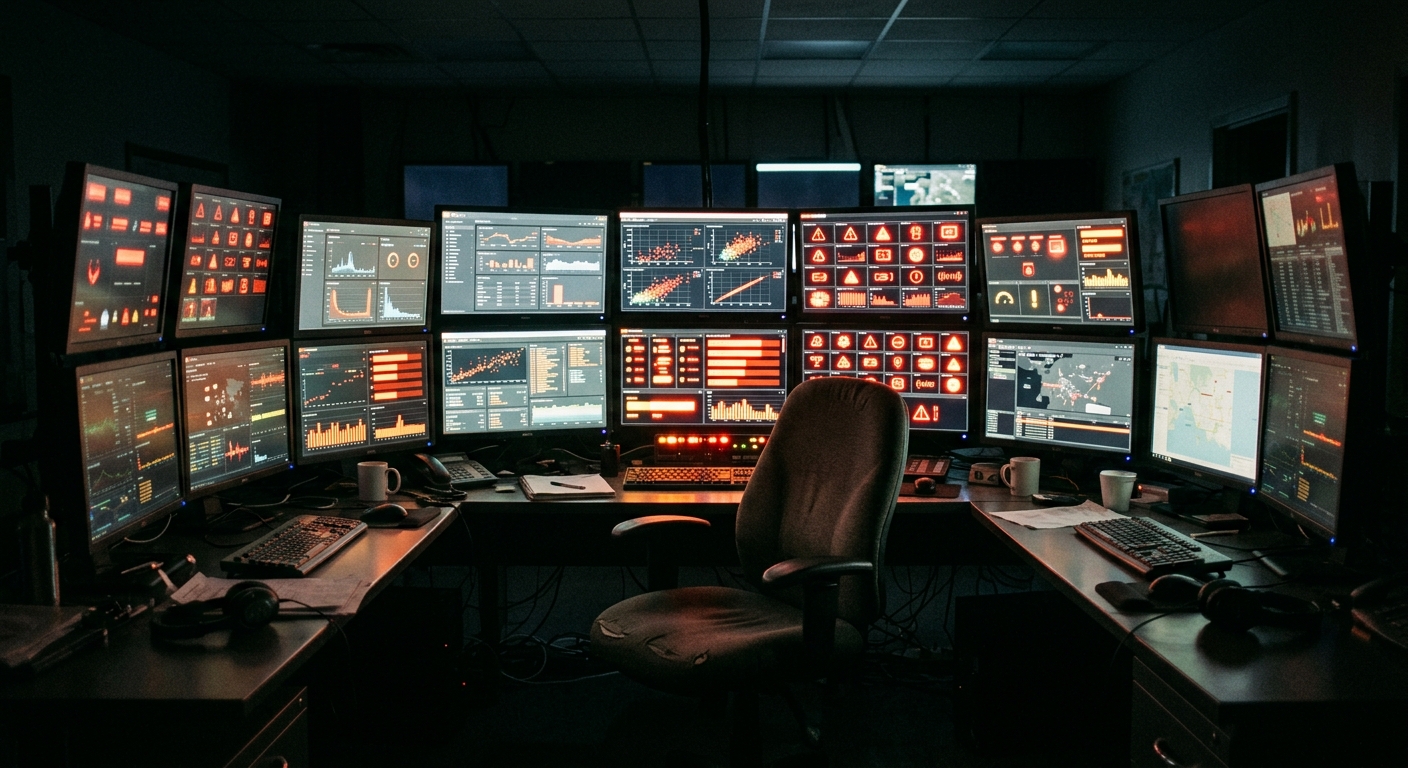
A single production incident can trigger more than 50 separate alerts across monitoring tools, logging platforms, and status pages, all firing for the same underlying problem. That volume isn’t a minor annoyance engineers learn to tune out. It’s a measurable driver of the kind of burnout that turns into a resignation letter, and the actual cost of replacing a senior engineer, roughly $80,000 per departure once recruiting, ramp time, and lost institutional knowledge are counted, makes this a cost problem long before it’s a culture problem.
Why One Incident Produces Fifty Alerts
Most alerting setups grow incrementally: a new tool gets added, it gets its own alerting rules, and nobody goes back to check whether those rules overlap with what three other tools already report on the same failure. The result is a stack where a single root cause, a database connection pool exhausting, say, trips alerts in the application monitoring tool, the infrastructure monitoring tool, the logging platform, the status page, and often a synthetic uptime checker, all within the same few minutes. Each tool is doing its job correctly. The aggregate experience for whoever’s on call is fifty notifications about one problem.
Why This Specifically Drives Turnover
It punishes exactly the people who are good at their jobs. The engineers most likely to be on the hook for a high-severity incident are the senior ones with the context to actually resolve it, which means the alert-fatigue cost concentrates on the people whose time is most expensive to lose and hardest to replace.
It’s a chronic cost, not an occasional one. A single bad on-call week is survivable. A pattern of every incident producing an overwhelming, redundant alert storm is a standing tax on the job, and standing costs are exactly what erode retention over time, even when no single week looks like the breaking point.
It signals a level of organizational neglect that reads as a broader warning sign. An engineer experiencing alert fatigue isn’t just annoyed by notification volume. They’re absorbing a signal that nobody has prioritized fixing a known, fixable problem, and that signal generalizes into a broader read on whether the organization invests in the conditions their senior engineers actually work under.
What Actually Fixes It
Alert deduplication and correlation, not just alert reduction. The goal isn’t fewer tools watching the system. It’s fewer notifications for the same underlying event, achieved by correlating signals across tools so a single incident produces a single actionable alert instead of a flood from every tool that happened to notice something wrong.
A real ownership review of what actually needs a human awake at 3am. A meaningful share of alerts are informational, not actionable in the moment, and don’t need to interrupt anyone’s sleep. Separating “needs immediate human attention” from “worth knowing about during business hours” is a design decision most alerting stacks never explicitly make.
Treating alert volume as an engineering metric leadership actually tracks. Alert fatigue persists in a lot of organizations because nobody above the on-call rotation is looking at alert volume as a number that matters. Making it visible, tracked, and owned is what turns a chronic annoyance into a problem someone is actually accountable for solving.
The Bottom Line
Fifty alerts for one incident isn’t a sign that your monitoring is thorough. It’s a sign that nobody has done the work of making your monitoring coherent, and the cost of skipping that work isn’t abstract. It shows up as a resignation letter from exactly the engineer you could least afford to lose, and an $80,000 bill to replace them.