
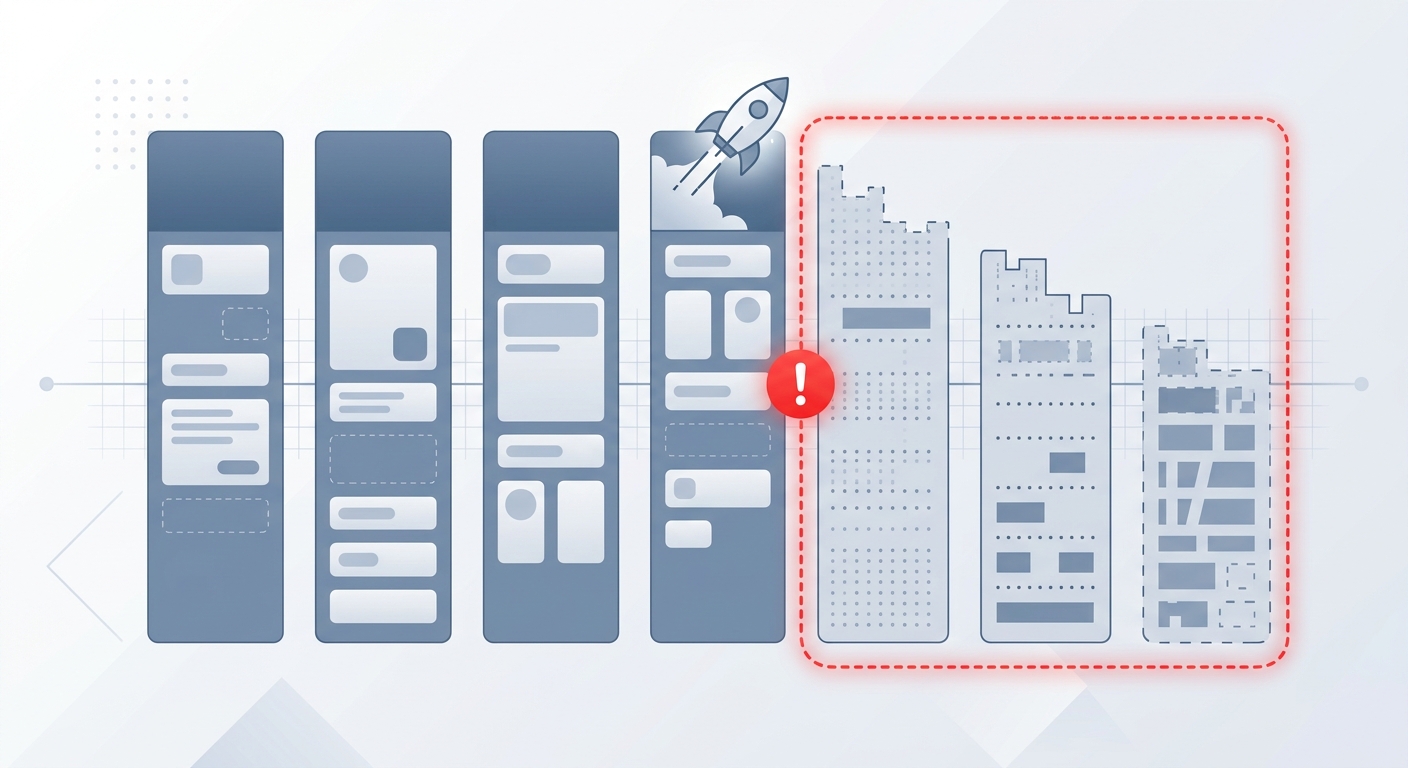
Labor Day is coming up, and with it the annual version of a question every engineering team eventually has to answer: do you ship the Thursday or Friday before a long weekend, or hold it. The instinct is usually a blanket rule — never deploy before a long weekend, full stop. That rule is simpler than the actual risk calculus, and simpler isn’t always better. Here’s what actually determines whether a pre-holiday deploy is a reasonable call or a genuinely bad idea.
The Blanket Rule Gets the Reasoning Half Right
The “never deploy before a long weekend” rule exists because the failure mode is real: a change ships, something goes wrong, and the team that would normally catch and fix it quickly is scattered, unreachable, or explicitly off duty. That’s a legitimate risk, and it’s not imaginary — a lot of teams have a specific story about the holiday-weekend incident that took three times longer to resolve than it should have, purely because of who wasn’t around.
Where the blanket rule goes wrong is treating every deploy as equally risky, regardless of what’s actually being shipped. A low-risk, well-tested, easily reversible change carries a fundamentally different risk profile than a major schema migration, and a rule that treats them the same is either too conservative for the first case or not conservative enough for the second.
What Actually Determines the Risk
How easily the change reverts. A deploy with a fast, well-tested rollback path is a different risk category entirely from one where reverting means another multi-step deployment. If something breaks and the fix is “revert,” the holiday coverage gap matters much less, because the response doesn’t require deep on-call expertise — it requires someone with access clicking a button.
Whether the failure mode is loud or quiet. Some bad deploys fail immediately and obviously — errors spike, alerts fire, it’s unmistakable within minutes. Others fail quietly, producing subtly wrong behavior that isn’t obvious until someone actually notices days later. The second category is far more dangerous heading into a long weekend, because a holiday-weekend team, even a reduced one, can catch the loud failure. Nobody catches the quiet one until everyone’s back.
Who’s actually on call, not just who’s nominally on call. A rotation that lists someone as on-call doesn’t mean that person has full context on the specific change being shipped. If the person actually available over the weekend didn’t write the code and isn’t deeply familiar with it, the effective coverage is much thinner than the on-call schedule suggests, regardless of what the schedule says.
The Practical Framework
Ship the boring stuff. Low-risk changes with clean rollback paths are fine right up until the deploy freeze actually needs to start. Holding every deploy for days out of blanket caution has a real cost too — it creates a backlog that all lands at once right after the holiday, which is its own risk concentration.
Hold anything with a loud-failure risk that’s hard to revert. This is the actual category worth blocking — not because every risky deploy will fail, but because the cost of it failing during exactly the window when the team can’t respond well is disproportionate to whatever was gained by shipping a few days earlier.
Set an actual freeze window, communicated clearly, not a vague “be careful” norm. A specific cutoff — nothing non-trivial ships after Wednesday afternoon, for example — is something a team can actually plan around. A vague norm just means everyone makes their own individual judgment call under time pressure, which is exactly the condition that produces bad calls.
The Bottom Line
The question isn’t whether to deploy before a long weekend. It’s whether this specific change, with this specific rollback path and this specific coverage, is something the team could actually respond to well if it went wrong over the weekend. Most changes clear that bar easily. The ones that don’t are worth holding — not out of blanket caution, but because the actual math doesn’t work.